Fear of an Empty Life

krazy

George Herriman, Krazy Kat [detail from comic strip], 1913 – 1944.


Fear of an Empty Life

by Jennifer Moxley


All the long imprint of a smooth utterance – a single adhesive
word slips away, snuggles beside the accusatory newborn
thought which, barking from lack of care, might trap in a moment
of serious sorrow me and my dirty heart, we twist the arm
of friendship ’til the ancient swing by the nonchalant body
is rewritten as a trembling, angry, grudge. Split along
the physique axis of wrested love and that human pulp
the wealthy mock, old need, a shuffle from the coffin lip
silences mind into fiddlehead body, bobbing in the fifty-fifty
sheets, weighty yet so pitiful it cannot coax solution – Darwin
was a fool, conductor of teeming masses, I see them now
in sedimentary patterns, crushed umber colors and a hint of green.


I am content when I do not think the disclosure of love is a
weakness, I imagine myself invincible like a bully who sees
in the fear he coerces from his weaker brother the only version of
truth he’ll believe – satisfied sleep. I awake drenched, the sweat
between my breasts which are so small they cannot touch is slick
as mucous. The surface of beauty is awful and enormous to all of us
who are left behind and yet we seek our coordinates, willfully
follow them just the same as the moon might seem from certain
angles to willfully follow the earth. Choking pink ribbon of thought
fails the ferry crossing. Who cannot push life-sustaining rationalization
away without remembering, as though an error of judgment,
the callow power of preservation turned to resentment of the race.


It cannot, no matter, in verse, be real. Fucked up beauty
subtracts the awkward ugly plain ache of tripped-up memory stores
where I see you as a taut wing of fragile older skin whose pride
of effort flaps in an attempt to fly amidst its own disintegrating
structure, a sight so ridiculous that all but the buried are unable
to suppress their laughter and turn away. That’s an image hovering
above me here where there is still in my imagination a cool carpet
underfoot, a flavor of drug’s seductive distances, the expense of
early exits but no gun, never a gun. That weapon steals time for it
knows not what’s in a minute. Tiny blindfold box of selfish stomach,
parasite life, the measure of a second is insufficient
to leave you behind, you and all your crippling indifference.

______________

Jennifer Moxley is the author of five books of poetry, most recently Clampdown (Flood 2009), a book of essays, and a memoir. In addition, she has translated three books from the French. Her poems have been included in two Norton Anthologies, Postmodern American Poetry and American Hybrid. Her book The Sense Record (2002) was picked as one of the five best poetry books of the year by both Stride magazine (UK) and Small Press Traffic (US). In 2005 she was granted the Lynda Hull Poetry Award from Denver Quarterly. Her poem “Behind the Orbits” was included by Robert Creeley in The Best American Poetry 2002. She is Professor of Poetry and Poetics at the University of Maine. On Wednesday April 16th at the invitation of Orlando Reade, Jennifer Moxley gave a reading of new poems with Andrea Brady in McCosh 40. “Fear of an Empty Life” appears in Jacket Magazine no6.

The Mare of Money

Basquiat

Jean-Michel Basquiat, ‘Cassius Clay’, (Gagosian Gallery) 1982.


The Mare of Money

By Roger Reeves

Another dead mare waits
in the shoals of some body
of water, waits to be burden,
borne into a foaming ocean,
where it might become food
for whales, or, simply empty
signifier—hair latched to the sea’s undulation
like Absalom’s beauty
caught in the playful branches
of a tree desiring union,
entanglement, thick confusion—
but not this mare;
she does not get the luxury
of a lyric—a song that makes our own undoing
or killing sweet even as we go down
into the fire to rise as smoke.
This horse must lie, eyes open,
amongst the stones and fresh water
crawfish in Money, Mississippi,
listen to the men’s boots break the water
as they drop a black boy’s body near her head,
pick him up, only to let him fall again
there: bent and eye-to-eye with her
as though decaying is something
that requires a witness
—as though the mare might say:
on Tuesday after the rain fell,  
the boy’s neck finally snapped  
from the weight of the mill fan;  
he never looked at me again.
Or the boy might say:
No more. They part
here—the boy’s body found
in another man’s arms, carried back
to town, as the horse says nothing
because horses don’t speak, besides
this one’s dead.


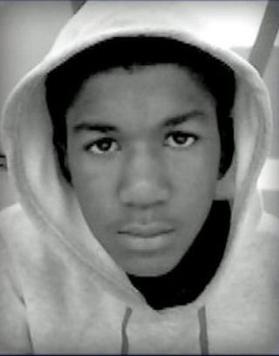
trayvon

Trayvon Martin (1995 – 2012) [undated screen capture]

_______________________

Roger Reeves‘s poems have appeared in journals such as PoetryPloughshares, American Poetry ReviewBoston Review, and Tin House, among others. He was awarded a 2013 NEA Fellowship, Ruth Lilly Fellowship by the Poetry Foundation in 2008, two Bread Loaf Scholarships, an Alberta H. Walker Scholarship from the Provincetown Fine Arts Work Center, and two Cave Canem Fellowships. He earned his PhD at the University of Texas-Austin and is currently an assistant professor of poetry at the University of Illinois, Chicago. “The Mare of Money” appears in his first book King Me (Copper Canyon Press, 2013).

Genie

Arthur Rimbaud in New York (tile floor gun)_0


Arthur Rimbaud in New York (subway station)


Arthur Rimbaud in New York (Duchamp)


01_Arthur Rimbaud in NY (smoking)

David Wojnarowicz, from Arthur Rimbaud in New York, 1978-79 (LLC/PPP Editions, 2004)


Genie

By Arthur Rimbaud, trans. John Ashbery


He is affection and the present since he opened the house to foaming winter and the hum of summer, he who purified drink and food, he who is the charm of fleeting places and the superhuman deliciousness of staying still. He is affection and the future, strength and love that we, standing amid rage and troubles, see passing in the storm-rent sky and on banners of ecstasy.
He is love, perfect and reinvented measurement, wonderful and unforeseen reason, and eternity: machine beloved for its fatal qualities. We have all experienced the terror of his yielding and of our own: O enjoyment of our health, surge of our faculties, egoistic affection and passion for him, he who loves us for his infinite life
And we remember him and he travels. . . And if the Adoration goes away, resounds, its promise resounds: “Away with those superstitions, those old bodies, those couples and those ages. It’s this age that has sunk!”
He won’t go away, nor descend from a heaven again, he won’t accomplish the redemption of women’s anger and the gaiety of men and of all that sin: for it is now accomplished, with him being, and being loved.
O his breaths, his heads, his racing; the terrible swiftness of the perfection of forms and of action.
O fecundity of the spirit and immensity of the universe!
His body! The dreamed-of release, the shattering of grace crossed with new violence!
The sight, the sight of him! all the ancient kneeling and suffering lifted in his wake.
His day! the abolition of all resonant and surging suffering in more intense music.
His footstep! migrations more vast than ancient invasions.
O him and us! pride more benevolent than wasted charities.
O world! and the clear song of new misfortunes!
He has known us all and loved us all. Let us, on this winter night, from cape to cape, from the tumultuous pole to the castle, from the crowd to the beach, from glance to glance, our strengths and feelings numb, learn to hail him and see him, and send him back, and under the tides and at the summit of snowy deserts, follow his seeing, his breathing, his body, his day.

_____________________________________

From Illuminations, John Ashbery, New York: W.W. Norton, 2012

A Message from the Wanderer

Cascade
Ray Atkeson, from Northwest Heritage: The Cascade Range, 1969


A Message from the Wanderer

by William Stafford

Today outside your prison I stand
and rattle my walking stick: Prisoners, listen;
you have relatives outside. And there are
thousands of ways to escape.

Years ago I bent my skill to keep my
cell locked, had chains smuggled to me in pies,
and shouted my plans to jailers;
but always new plans occurred to me,
or the new heavy locks bent hinges off,
or some stupid jailer would forget
and leave the keys.

Inside, I dreamed of constellations—
those feeding creatures outlined by stars,
their skeletons a darkness between jewels,
heroes that exist only where they are not.

Thus freedom always came nibbling my thought,
just as—often, in light, on the open hills—
you can pass an antelope and not know
and look back, and then—even before you see—
there is something wrong about the grass.
And then you see.

That’s the way everything in the world is waiting.

Now—these few more words, and then I’m
gone: Tell everyone just to remember
their names, and remind others, later, when we
find each other. Tell the little ones
to cry and then go to sleep, curled up
where they can. And if any of us get lost,
if any of us cannot come all the way—
remember: there will come a time when
all we have said and all we have hoped
will be all right.

There will be that form in the grass.

william stafford
_______________________________
On Thursday, February 27th from 5:30 to 6:45pm at the Princeton Art Museum, fans, friends, and fellow poetry lovers will gather to celebrate the hundredth anniversary of the American poet and beloved Oregonian Poet Laureate, William Stafford (1914 – 1993). Join us for readings, recollections, cakes and ale.

Maxine Kumin (1925 – 2014)

Kumin


Our Ground Time Here Will Be Brief

by Maxine Kumin


Blue landing lights make

nail holes in the dark.

A fine snow falls.

We sit

on the tarmac taking on

the mail, quick freight,

trays of laboratory mice,

coffee and Danish

for the passengers.


Wherever we’re going

is Monday morning.

Wherever we’re coming from

is Mother’s lap.

On the cloud-pack above, strewn

as loosely as parsnip

or celery seeds, lie

the souls of the unborn:


my children’s children’s

children and their father.

We gather speed for the last run

and lift off into the weather.

_____________________

“Our Ground Time Here Will Be Brief,” Maxine Kumin: Selected Poems, 1960-1990 (W.W. Norton, 1997) You can listen to a reading of this poem through The Poetry Foundation here.

If Into Love The Image Burdens

Gordon Parks Rally
Gordon Parks, Black Muslim Rally, Harlem, 1963


If Into Love The Image Burdens

by Leroi Jones/Amiri Baraka


The front of the head

is the scarred cranium. The daisy

night, alone with its mills. Grumbling

through history, with its nest

of sorrow. I felt lost

and alone. The windows

sat on the street and smoked

in dangling winter. To autumn

from spring, summer’s questions

paths, present to the head

and fingers. The shelf. The

rainbow. Cold knuckles rub against

a window. The rug. The flame. A woman

kneels against the sill. Each figure

halves silence. Each equation

sprinkles light.


Grey hats and eyes

for the photographed

trees. Grey stones and limbs

and a herd of me’s.


Past, perfect.


Each correct color

not in nature, makes

us weep. Each inexpressible

idea. The fog lifts. The fog

lifts. Now falls. The fog

falls.


And nothing is done, or complete. No person

loved, or made better or beautiful. Came here

lied to, leave


the same. Dead boned talk

of history. Grandfathers skid

down a ramp of the night. Flame

for his talk, if it twists

like light on leaves.


Out past the fingers.

Out past the eyes.


 __________________

Leroi Jones/Amiri Baraka, The Dead Lecturer, Grove Press, 1964


Amiri Baraka (1934 – 2014)

Amiri Baraka and Larry Neal

Amiri Baraka and Larry Neal, Newark, ca. 1967


The New World


The sun is folding, cars stall and rise
beyond the window. The workmen leave
the street to the bums and painters’ wives
pushing their babies home. Those who realize
how fitful and indecent consciousness is
stare solemnly out on the emptying street.
The mourners and soft singers. The liars,
and seekers after ridiculous righteousness. All
my doubles, and friends, whose mistakes cannot
be duplicated by machines, and this is all of our
arrogance. Being broke or broken, dribbling
at the eyes. Wasted lyricists, and men
who have seen their dreams come true, only seconds
after they knew those dreams to be horrible conceits
and plastic fantasies of gesture and extension,
shoulders, hair and tongues distributing misinformation
about the nature of understanding. No one is that simple
or priggish, to be alone out of spite and grown strong
in its practice, mystics in two-pants suits. Our style,
and discipline, controlling the method of knowledge.
Beatniks, like Bohemians, go calmly out of style. And boys
are dying in Mexico, who did not get the word.
The lateness of their fabrication: mark their holes
with filthy needles. The lust of the world. This will not
be news. The simple damning lust,
                                       float flat magic in low changing
                                       evenings. Shiver your hands
                                       in dance. Empty all of me for
                                       knowing, and will the danger
                                       of identification,


                           Let me sit and go blind in my dreaming
                           and be that dream in purpose and device.


                           A fantasy of defeat, a strong strong man
                           older, but no wiser than the defect of love.
________________
From Transbluesency: The Selected Poems of Amiri Baraka/LeRoi Jones, 1961-1995 (New York: Marsilio Publishers, 1995)

Hôtel Transylvanie

Caravaggio

Caravaggio, The Cardsharps, 1571, Kimbell Art Museum


Hôtel Transylvanie

by Frank O’Hara


Shall we win at love or shall we lose
————————————————————can it be
that hurting and being hurt is a trick forcing the love
we want to appear, that the hurt is a card
and is it black? is it red? is it a paper, dry of tears
chevalier, change your expression! the wind is sweeping over
the gaming tables ruffling the cards/they are black and red
like a Futurist torture and how do you know it isn’t always there
waiting while doubt is the father that has you kidnapped by friends

———yet you will always live in a jealous society of accident
you will never know how beautiful you are or how beautiful
the other is, you will continue to refuse to die for yourself
you will continue to sing on trying to cheer everyone up
and the will know as the listen with excessive pleasure that you’re dead
———and they will not mind that they have let you entertain
at the expense of the only thing you want in the world/you are amusing
as a game is amusing when someone is forced to lose as in a game I must

——————————————oh hôtel, you should be merely a bed
surrounded by walls where two souls meet and do nothing but breathe
breathe in breathe out fuse illuminate confuse stick dissemble
but not as cheaters at cards have something to win/you have only to be
as you are being, as you must be, as you always are, as you shall be forever
no matter what fate deals you or the imagination discards like a tyrant
as the drums descend and summon the hatchet over the tinseled realities

you know that I am not here to fool around, that I must win or die
I expect you to do everything because it is of no consequence/no duel
you must rig the deck you must make me win at whatever cost to the reputation
of the establishment/sublime moment of dishonest hope/I must win
for if the floods of tears arrive they will wash it all away
—————————————————————————————and then
you will know what it is to want something, but you may not be allowed
to die as I have died, you may only be allowed to drift downstream
to another body of inimical attractions for which you will substitute/distrust
and I will have had my revenge on the black bitch of my nature which you
———————————————love as I have never loved myself
but I hold on/I am lyrical to a fault/I do not despair being too foolish
where will you find me, projective verse, since I will be gone?
for six seconds of your beautiful face I will sell the hotel and commit
an uninteresting suicide in Louisiana where it will take them a long time
to know who I am/why I came there/what and why I am and made to happen


_____________________________

“Hotel Transylvanie”, The Collected Poems of Frank O’Hara, Alfred A. Knopf, 1995

rousseau_cartepromenade

Eight of Hearts, with jottings by Jean-Jacques Rousseau.
(One of the twenty-seven playing cards found with the unfinished manuscript of
Les Rêveries d’un promeneur solitaire at the death of Rousseau in 1778.)

Where We Live

from Boring Postcards U.S.A., Martin Parr, Phaidon Press 2004


Where We Live

By Michael Dickman


                     For John Guare


I used to live

in a mother now I live

in a sunflower


Blinded by the silverware


Blinded by the refrigerator


I sit on a sidewalk

in the sunflower and its yellow

downpour


The light of  the world

beads up on one perfect

green leaf


It scribbles its name on every living thing then erases it so what’s left is more of a whisper than a mother


Here it’s spring


Over and over and over again


I used to live

in a cloud now I live

in a crow


It’s tiny and crippled in there but I can find my way to the bathroom in the dark if   I need to


All the windows

in the crow are left open

and let the clouds in


Back in


They float past my bed and have nothing to say


Hello it’s nice to meet you!


From a telephone pole

tongues slide out singing

welcome home


Welcome home they sing


I used to live

in a tree now I live

in a king


He waves his arms in front of   him and endless migrations of   birds disappear into his coat


I like to sit up inside

his crown eating sandwiches

and watching tv


Hills shake in the distance when he shuffles his feet

Floods when he snaps his fingers


I bow inside his brow and the afternoon stretches out

Orders more sandwiches


And sells the slaves


and sets the slaves free


and sells the slaves


“Where We Live” appears in Poetry (December 2013).

____________________

Michael Dickman, a 2009 Hodder Fellow, is currently Lecturer in Creative Writing at the Lewis Center for the Arts. Dickman was born and raised in the Lents neighborhood of Portland Oregon. He has received fellowships from the Michener Center for Writers in Austin, Texas, the Fine Arts Work Center, and the Vermont Studio Center, and he won the 2008 Narrative Prize. His poems have appeared in The New Yorker, The American Poetry Review, Field, Tin House, Narrative Magazine and others.